
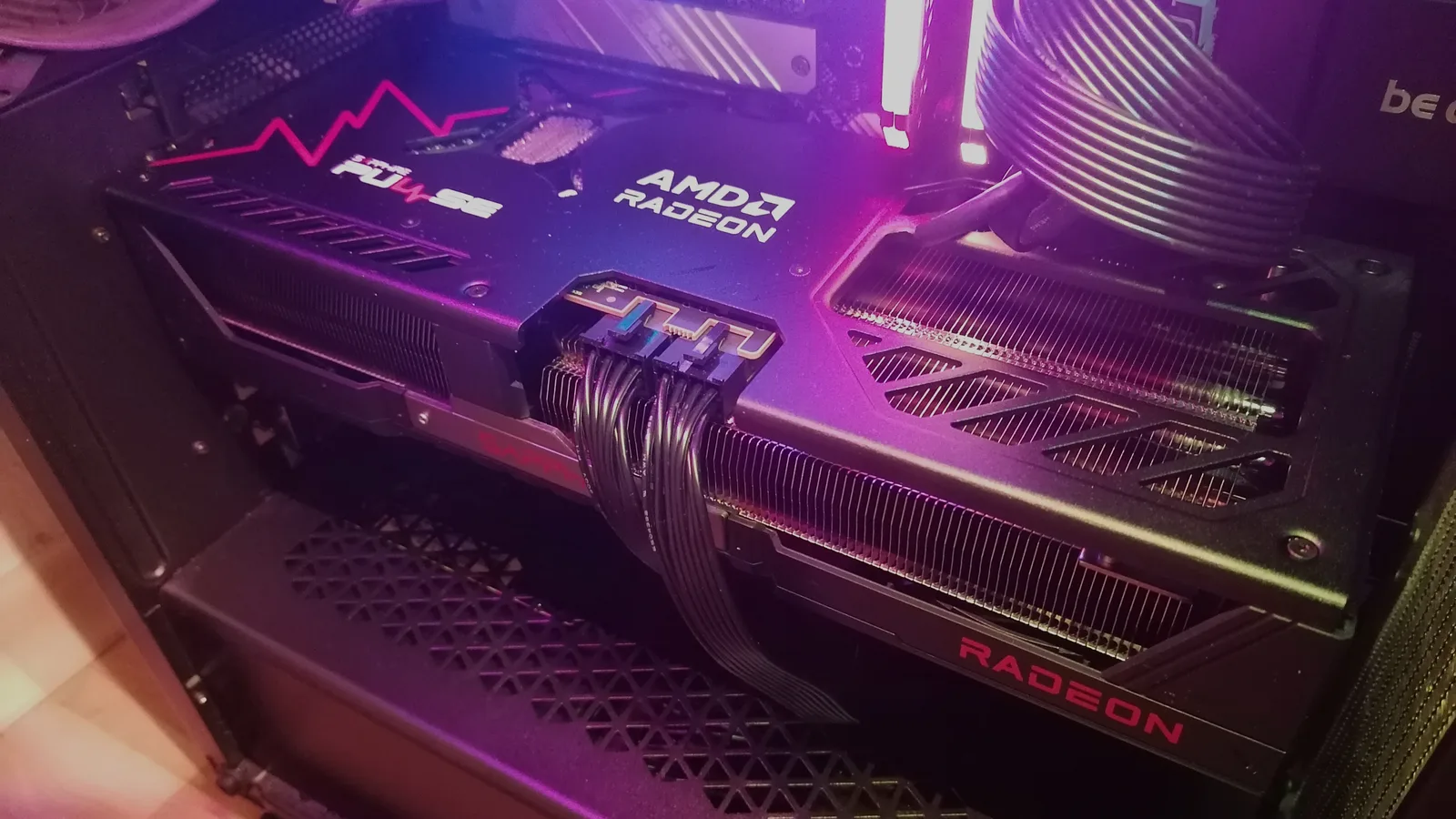
As of Nov 1, 2026, a single unconfirmed channel report says AMD may raise the cost of Radeon GPU and GDDR6 kits supplied to board partners again in November. Buy if you need a card now and find the exact model near its usual street level; wait if your current GPU is fine and you are shopping for Black Friday. AMD has not confirmed a figure or affected models, according to Hardware Busters.
For an RX 9070, RX 9070 XT or RX 9060 XT purchase, the practical question is whether today’s offer meets your needs. This is research-based buying analysis using published reporting and AMD specifications. Start with our graphics-card buying guide if you have not chosen a performance tier.
What the report says
Wccftech’s Oct 30 report attributes the November claim to supply-chain account ChannelGate. The reported increase concerns the GPU-plus-GDDR6 bundle AMD supplies to board partners. Partners add the circuit board and cooler to produce the finished card.
ComputerBase’s Oct 30 coverage also traces the claim to Chinese partner-channel information. Hardware Busters identifies Board Channels and ChannelGate in the same reporting chain, with ChannelGate also reporting an earlier October 1 adjustment. These stories repeat one underlying channel report; they do not establish several independent confirmations.
What AMD has and hasn’t confirmed
AMD’s official RX 9070 series announcement specifies 16GB of GDDR6 for both the RX 9070 and RX 9070 XT. Its RX 9060 XT announcement lists separate 8GB and 16GB versions.
Those specifications are confirmed product information. The November partner-cost plan remains unconfirmed. The reporting does not name affected models or provide a final adjustment, so an RX 9070, RX 9070 XT or RX 9060 XT on your shortlist is not a confirmed target of this rumored change.
How much could Radeon cards go up?
There is no verified percentage for the proposed November increase. ComputerBase reports that GDDR6 costs rose approximately 8% to 10% in the third quarter, citing the channel report. That figure describes a reported memory-cost change; it is not a forecast for the next US retail increase.
Wccftech discusses a possible retail effect but acknowledges uncertainty about how the memory increase would translate. GPU and memory procurement is only part of a finished card’s cost. Partner decisions and existing inventory can change the timing and size of any retail response. We cannot put a reliable number on your next Radeon purchase from this report.
Buy, wait, or skip
- Buy if your current card has failed or cannot handle the work or games you need now, and the exact replacement is near its recent street level. Compare the same board and memory capacity across sellers before ordering.
- Wait if your current GPU is doing its job and you are targeting Black Friday. Keep a shortlist and an offer history; waiting gives you time to compare, without guaranteeing a discount.
- Skip inflated markups justified by the rumor. For a new 1440p purchase, our recommendation is to skip 8GB cards and prioritize a suitable 16GB model. That is buying guidance, not a claim that every game requires 16GB.
The GPU hierarchy helps you compare performance tiers before paying for a larger partner cooler or factory overclock.
What to check before you buy a Radeon card now
Confirm the full board name and VRAM capacity on the listing and order summary. RX 9060 XT alone does not identify whether you are buying the 8GB or 16GB version. More memory also does not make the RX 9060 XT interchangeable with a higher-tier GPU; compare the card against your games and resolution.
Check case clearance, power connections and the board maker’s PSU recommendation for that exact model. Read the seller’s return window, condition and warranty terms, especially if you plan to compare holiday offers after delivery. Save a dated price history for the same model, rather than comparing a premium board with a basic one.
Our RTX 5080 store-removal report addresses a separate availability question. The DDR5 buying check covers system-memory pressure. Neither establishes the size of a future Radeon retail increase.
Our recommendation
Keep a working GPU if your upgrade can wait. If you need a replacement now, choose an RX 9070, RX 9070 XT or RX 9060 XT 16GB only when its performance, system fit and current offer make sense for you. Leave an inflated listing behind even if its seller points to rising component costs.
Use which graphics card to buy to narrow the choice, then check the exact board’s recent offers and return terms. An unconfirmed cost report should prompt a price-history check, not a rushed purchase.
Photo: Chaddy via Wikimedia Commons, CC BY-SA 4.0. Cropped and resized; this image and its derivatives remain under CC BY-SA 4.0.
