
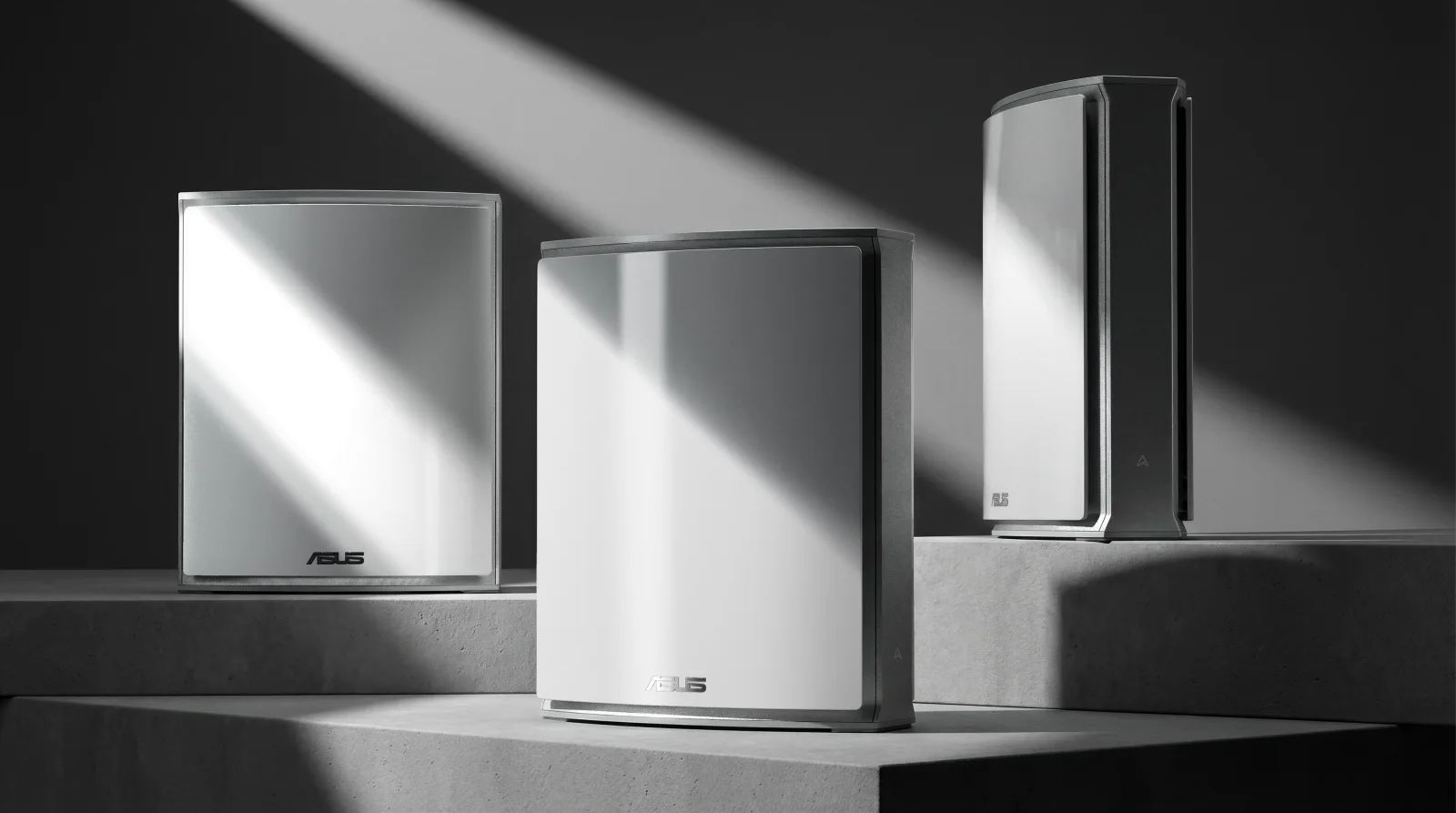
What ASUS announced
As of Oct 20, 2026, ASUS says its ZenWiFi BN12 Wi-Fi 8 mesh system is shipping, with features aimed at connection reliability and multi-gig wired networking. Consider it if you have a large home, a wired backhaul plan and a reason to adopt early; if your existing network covers your home and your devices lack Wi-Fi 8, waiting is the more practical starting point.
Wi-Fi 8 (IEEE 802.11bn) focuses on reliability rather than just peak speed, according to ASUS; the IEEE’s own timeline projects final approval in 2028. The standard is still a draft, and that date is a projection.
ASUS’s October 20 release calls the BN12 the world’s first Wi-Fi 8 mesh system. That is ASUS’s claim. ASUS advertises tri-band speeds of up to 19Gbps and coverage of up to 7,000 square feet for the two-pack configuration. Neither figure is a measurement of your home’s internet speed or coverage.
ASUS’s release does not list US pricing or a US date as of Oct 20, 2026. Its September announcement had said US availability would be announced shortly; today’s shipping wording does not supply that missing US detail. This report is research-based, not lab-tested.
What Wi-Fi 8 actually changes
ASUS describes the goal as more consistent connections when signal conditions change, including better throughput at medium and longer distances and improved connectivity for low-power IoT devices near the network edge. Those are manufacturer statements, not performance results we have measured.
In its September rollout announcement, ASUS distinguishes its engineers’ testing with current Wi-Fi 7 clients from simulations of features that help as compatible clients arrive. Do not treat those simulations as proof that every device you already own can use UEQM or NPCA.
Wi-Fi 8 today
| Feature | What ASUS says it does | What you need to benefit |
|---|---|---|
| UEQM, Unequal Modulation | ASUS lists UEQM among the new Wi-Fi 8 technologies; its rollout announcement discusses benefits in simulations as compatible clients arrive. | Compatible clients and supported firmware. Check support rather than assuming a Wi-Fi 7 device gains this feature. |
| NPCA, Non-Primary Channel Access | ASUS names NPCA as another Wi-Fi 8 technology, with the same compatible-client qualification in its rollout context. | Confirm that the client and router support the feature; the badge alone does not establish a gain today. |
| Multi-AP Coordination | ASUS lists coordination across access points among the BN12’s Wi-Fi 8 technologies. | Check the exact mesh-node combination and firmware support, especially if mixing it with existing AiMesh gear. |
| 10G Ethernet ports | ASUS specifies two 10G Ethernet ports per node, alongside three 2.5G ports. These are wired hardware features. | An appropriate Ethernet backhaul and compatible switch where used; a multi-gig plan to make the WAN capability relevant. |
ASUS’s global specification sheet identifies one 10Gbps WAN/LAN port and one 10Gbps LAN port per node. It also lists compatibility with earlier Wi-Fi generations. That compatibility does not establish access to every new Wi-Fi 8 feature.
Who it’s for, and who should wait
The BN12 is most relevant to an early adopter with a large home, multi-gig internet and Ethernet between mesh nodes. It may also fit someone deliberately buying ahead of compatible Wi-Fi 8 clients, provided they accept the draft-standard and availability questions.
Who should wait
If you have no Wi-Fi 8 clients, a small home, no cable between nodes or an internet plan below multi-gig, start by checking whether the proposed upgrade addresses a problem you actually have. Those conditions do not mean the BN12 cannot work; they weaken the reason to choose it for its newest features.
For a coverage problem, compare our mesh Wi-Fi picks. If one router can cover your home, compare the Wi-Fi 7 router options before paying for a mesh plan you do not need. Existing Wi-Fi 7 clients are not a reason by themselves to replace a stable network.
What to check before you buy
- The problem: identify a coverage gap separately from a slow internet connection. Decide which one you need the purchase to address.
- Client support: Wi-Fi 8 clients remain scarce. Check your actual devices; ASUS says the newer UEQM and NPCA benefits depend on compatible clients arriving.
- Draft status: the IEEE projects final approval in 2028. Check the firmware-update plan rather than treating the standard as final today.
- Backhaul: plan the Ethernet path between nodes and any 10G switch. The presence of 10G ports does not establish that an unwired node-to-node link will run at that rate.
- Internet plan: check whether your service is multi-gig before choosing for a 10G WAN port. The port does not change the speed of your plan.
- Coverage claim: ASUS’s up-to-7,000-square-foot figure applies to the two-pack configuration. Walls, floors and node placement matter; do not treat it as a guarantee for your layout.
- US purchase terms: the release gives no US pricing or US date. Confirm local availability, warranty and the return window before committing.
- Regional limits: ASUS notes that 240MHz bandwidth in the 5GHz band may be unavailable in some regions or countries. Check the regional specification for the unit you would buy.
Our recommendation
Choose by coverage, backhaul and the devices you have now. The BN12 is an early-adopter candidate for a large, wired, multi-gig home, not a demonstrated upgrade for every existing mesh network. Wait if the main reason you are considering it is the Wi-Fi 8 label and you cannot yet use the new client-dependent features.
See our mesh Wi-Fi picks for a coverage-and-backhaul starting point, or compare Wi-Fi 7 routers if a single router suits your home. Our research method explains how we separate manufacturer claims from independent evidence. Find other dated reports in THP news.